Long March (Chang Zheng)

China (PR)


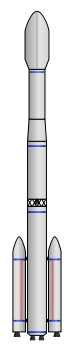
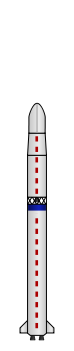
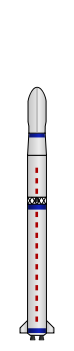
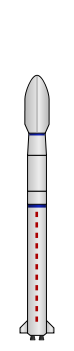
A Long March rocket or Chang Zheng rocket as in Chinese pinyin is any rocket in a family of expendable launch systems operated by the People's Republic of China. Development and design falls under the auspices of the China Academy of Launch Vehicle Technology. In English, the rockets are abbreviated as LM- for export and CZ- within China, as "Chang Zheng" means "Long March". The rockets are named after the Long March of Chinese communist history.


History:


CZ-1 launchers:


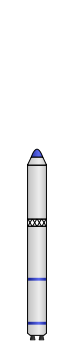
The CZ-1 rocket (Chang Zheng = Long March) was derived from the CSS-3 (also called DF-4 by the Chinese, Dong Feng = East Wind) which was added a solid fuel third stage. The first stage was 17.8 m long and weighed 64.1 tons including 60 tons of propellant (Nitric Acid and UDMH). It was powered by a YF-2A motor featuring 4 chambers of 1100 kN at ground level, burning during 130 seconds (ISp = 241 s). The 5.4 m second stage weighed 15.9 tons including 13.2 tons of ergols (NTO and UDMH). It used a YF-3 motor providing 294 kN thrust in vacuum during 126 seconds (ISp = 287 s). The spin-stabilized third stage required a GF=02 powder bloc weighing 1.8 tons which provides 29 kN thrust.

The full CZ-1 launcher was 29.45 m high for 81.6 tons at takeoff and could orbit a 300 kg payload at 440 km with 70° inclination. It launched the 2 first Chinese satellites from Juiquan in April 1970 and March 1971 after a failure in November 1969.

Enhanced version of this launcher: CZ-1C and CZ-1D completly Chinese and CZ-1M featuring an Italian 3rd stage (IRIS) were announced...

Second generation launchers: FB-1 and CZ-2A/D:


The first Chinese ICBM CSS-3 (or DF-5 in the Chinese jargon) was over 30 m high for 3.35 m diameter. It featured two liquid fuel stages (NTO and UDMH) and ranged 11000 km. In-flight tests were carried out in 1979 and only few exemplars (8 to 12 ?) were deployed after 1980.

Its development was carried out in the same time as two space launcher programs: FB-1 (Feng Bao = storm) and CZ-2. Very little is known on the FB-1 but it is probably similar to CZ-2 with lower performances (1.2 tons is LEO against 1.7 tons). Some sources believe the two launchers were developped by two different agencies (SBA (Shanghai Bureau of Astronautics) et la BWYIC (Beijing Wan Yuan Industry Corporation)) from the same specifications. It was launched successfully 4 times from Jiuquan between July 1975 and September 1981; 4 failures and 3 suborbital flights were also reported.

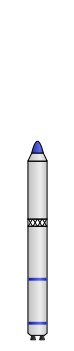
The most important launcher of the other series is the CZ-2C. The CZ-2A was indeed only fired once in November 1974 and the B designation used for the FB-1. The CZ-2C featured a L-140 first stage of 20.5 m long which weighed 151 tons including 142 tons of propellant. It was powered by 4 YF-20 motors of 696 kN thrust at ground level (ISp = 260 s) which burned during 132 seconds. The second stage (L-35) was 7.5 m long and 39 tons (35 tons for propellant). It was equipped with an YF-22 motor providing 762 kN in vacuum (ISp = 290 s) associated with 4 deployable YF-23 verniers providing a total of 44 kN. The main engine burned 110 seconds while the verniers 300 seconds.

The CZ-2C launcher is 32.6 to 35.1 m high (depending on the cap) and weighed about 191 tons. It can deliver 2 to 2.5 tons in LEO. From Juiquan it orbited 9 retrievable FSW-0 (Fanhui Shi Weixing) satellites between November 1975 and August 1987 and 5 FSW-1 since September 1987. An enhanced version named CZ-2D launched two FSW-2 satellites in August 1992 and July 1994.

Three-stage versions of the CZ-2C were announced (with a solid SD or CPKM stage). Only the CZ-2C/SD should be used for Iridium.

CZ-3 launchers:


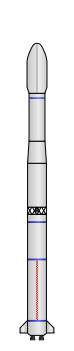
The CZ-3 rocket is a 3-stage launcher which makes use of modified versions of the 2 first stages of CZ-2C (same performances) and adds a cryogenic third stage. This H-8 cryogenic stage is 7.5 m long for 2.25 m diameter. It weighs 10.5 tons including 8.5 tons of propellant (LH2 and LOX). it is equipped with a 4-chamber YF-73 motor providing 44 kN thurst in vacuum (ISp = 420 s). The reignitable motor is used for two burns during 500 and 300 seconds.

This launcher is 43.2 to 43.8 m high and weighs 202 tons. It can orbit 1.4 tons in GTO. It was used from Xichang from January 1984 on to launch Chinese telecommunication satellites of foreign spacecrafts. It should still be used even after the introduction of enhanced versions designated CZ-3A and CZ-3B.

Third generation launchers: CZ-4, CZ-2E and CZ-3A/B:


A new Chinese generation was introduced in the late eighties based on a streched L-180 first stage equipped with more powerful motors.

The first launcher to use those new elements was CZ-4 specialy designed for sunsynchronous orbits. The first stage is thus an L-180 with 24.7 m long carrying 138 tons propellant powered during 156 seconds by 4 YF-20 motors which unitary thrust was boosted to 735 kN. The second stage is an modified L-35 with 10.4 m long. Its main engine is a YF-25 of 766 kN assisted by 4 YF-23 verniers. The third stage (L-14) specific to the CZ-4 is 6.2 m long for 2.9 m diameter. It is equipped with a pair of YF-40 engines which burn NTO and UDMH. Their total thrust is 98 kN during 321 seconds (ISp = 303 s). This CZ-4 reaches 42 m high and 250 tons. It can deliver a 1.5 ton payload on sun-synchronous orbit at 900 km. It was used to launch 2 meteorological FY satellites from Taiyuan in Sep 1988 and Sep 1990.

The second launcher to use the L-180 and the enhanced motors is the CZ-2E devoted to heavy GEO payloads. The first stage is an L-180 with 23.7 m long (187 tons propellant) propulsed during 159 seconds by 4 YF-20 motors of 735 kN. It is assisted during 126 seconds by 4 LB-40 boosters of 15.6 m long and 2.25 m diameter (38 tons of propellant each) equipped with the same YF-20 engines. The second stage is an L-90 of 15.5 m long (86 tons ergols) with a YF-25 main engine of 831 kN. It is surrounded by 4 YF-23 verniers. The main engine burns during 300 seconds while the version 413 seconds.

The CZ-2E is 49.7 to 51.2 m high. It weighs 460 tons at takeoff. Its capacity reaches 8.8 tons in LEO but it is only used for geostationary satellites with a solid perigee stage. The first version with the American Thiokol Star-63F could place 3.14 tons in GTO. With the EPKM of the Chinese HCMC (Hexi Chemical & Manufacturing Corp) company used for the first time in Nov 1995 the performance reaches 3.46 tons. After a trial launch in July 1990 the CZ-2E was used to launch several telecommunications satellites from Xichang...

The third launcher based on the L-180 was the CZ-3A also devoted to heavy payloads aimed at GEO. The first stage is a 23 m long L-180 (170 tons of propellant) powered by four 735 kN YF-20 motors. The second stage is a L-35 of 11.5 m long (29.6 tons ergol) with an YF-25 main engine of 766 kN which burns during 110 seconds assited by 4 YF-23 verniers. The new H-18 cryogenic third stage is 8.8 m long and 3.0 m diameter (17.6 tons propellant). It features 2 YF-75 engines providing a total thrust of 157 kN (ISp = 425 s) during 470 seconds in 2 burns.

The CZ-3A has a total of 52.3 m high and 240 tons at takeoff. It can orbit 2.3 tons in GTO. After a trial launch in Feb 1994 to launched a 3rd generation telecommunication DFH satellite in Nov 1994.

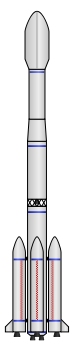
The CZ-3B used the CZ-3A with 4 liquid boosters inherited from the CZ-2E. It then weighs 403 tons at takeoff and its capacity reaches 4.85 tons in GTO. It first launch failed in Feb 1996.

Specifications:

Model Status Stages Length
(m)
Max. diameter
(m)
Liftoff mass
(t)
Liftoff thrust
(kN)
Payload
(LEO, kg)
Payload
(GTO, kg)
Long March 1 Retired 3 29.86 2.25 081.6 1,020 300 -
Long March 1D Retired 3 28.22 2.25 081.1 1,101 930 -
Long March 2A Retired 2 31.17 3.35 190 2,786 1,800 -
Long March 2C Active 2 35.15 3.35 192 2,786 2,400 -
Long March 2D Active 2 33.667
(without shield)
3.35 232 2,962 3,100 -
Long March 2E Retired 2 (plus 4
Strap-on boosters)
49.686 7.85 462 5,923 9,500 3,500
Long March 2E In development 2 (plus 4
Strap-on boosters)
53.60 N/A 695 8,910 14,100 -
Long March 2F Active 2 (plus 4
Strap-on boosters)
58.34 7.85 480 5,923 8,400 3,370
Long March 2F/G Active 2 (plus 4
Strap-on boosters)
N/A 7.85 N/A N/A 11,200 N/A
Long March 3 Retired 3 43.8 3.35 202 2,962 5,000 1,500
Long March 3A Active 3 52.52 3.35 241 2,962 8,500 2,600
Long March 3B Retired? 3 (plus 4
Strap-on boosters)
54.838 4.00 426 5,924 12,000 5,100
Long March 3B/E Active 3 (plus 4
Strap-on boosters)
56.326 4.20 458.97 ? ? 5,500
>Long March 3B(A) In development 3 (plus 4
Strap-on boosters)
62.00 4.20 580 8,910 13,000 6,000
Long March 3C Active 3 (plus 2
Strap-on boosters)
55.638 7.85 345 4,443  ? 3,800
Long March 4A Retired 3 41.9 3.35 249 2,962 4,000 (SSO)
1,500
Long March 4B Active 3 44.1 3.8 254 2,971 4,200 (SSO)
2,200
Long March 4C Active 3   3.35   2,971? 4,200 (SSO)
2,800
Long March 5 In development 3 N/A N/A N/A N/A 25,000 14,000
Long March 6 Active 3           (SSO)
500
Long March 7 Active 2 57 3.35 594 7200 12500 7000
Long March 8 In study              
Long March 9 In study     8 to 10 3000   130000 50000
Long March 11 Active 3 solid (+1 liquid?) 20.8 ~2 58   700 (SSO)
350

CZ-2A CZ-2C CZ-2D CZ-2E CZ-2F CZ-3 CZ-3A CZ-3B CZ-3C CZ-4A CZ-4B CZ-4C

CZ-1 launches:

# Launch id Payload Launch date Type Status/Comment (orbit in perigee x apogee x inc. x period)
1, CZ-1 n/a R&D suborbital 10 Jan 1970    
2, CZ-1 70034 DFH 01 24 Apr 1970    
3, CZ-1 71018 DFH 02 3 Mar 1971    

Notes: All launches from Juiquan.


CZ-2, 3 & 4 launches


# Launch id Payload Launch date Site Type Status/Comment
1, CZ-2 n/a FSW 0 05 Nov 1974 Ji A? Failure: 1st stage control system failure
2, CZ-2 75111 FSW 0-1 26 Nov 1975 Ji C  
3, CZ-2 76116 FSW 0-2 07 Dec 1976 Ji C  
4, CZ-2 78011 FSW 0-3 26 Jan 1978 Ji C  
5, CZ-2 82090 FSW 0-4 09 Sep 1982 Ji C  
6, CZ-2 83086 FSW 0-5 19 Aug 1983 Ji C  
7, CZ-3 84008 STTW-T1 29 Jan 1984 Xi   Partial failure: 3rd stage failed to ignite
8, CZ-3 84035 STTW-T2 08 Apr 1984 Xi    
9, CZ-2 84098 FSW 0-6 12 Sep 1984 Ji C  
10, CZ-2 85096 FSW 0-7 21 Oct 1985 Ji C  
11, CZ-3 86010 STTW 1 01 Feb 1986 Xi    
12, CZ-2 86076 FSW 0-8 06 Oct 1986 Ji C  
13, CZ-2 87067 FSW 0-9 05 Aug 1987 Ji C  
14, CZ-2 87075 FSW 1-1 09 Sep 1987 Ji C  
15, CZ-3 88014 STTW 2 07 Mar 1988 Xi    
16, CZ-2 88067 FSW 1-2 05 Aug 1988 Ji C  
17, CZ-4 88080 FY 1-1 06 Sep 1988 Ty    
18, CZ-3 88111 STTW 3 22 Dec 1988 Xi    
19, CZ-3 90011 STTW 4 04 Feb 1990 Xi    
20, CZ-3 90030 Asiasat 1 07 Apr 1990 Xi    
21, CZ-2 90059 Badr A 16 Jul 1990 Xi E (PKM) Failed to place the Optus model in GTO
22, CZ-4 90081 A: FY 1-2
B: DFH 31
C: DFH 32
03 Sep 1990 Ty    
23, CZ-2 90089 FSW 1-3 05 Oct 1990 Ji C  
24, CZ-3 91088 STTW 5 28 Dec 1991 Xi   Partial failure: 3rd stage failed to ignite
25, CZ-2 92051 FSW 2-1 09 Aug 1992 Ji D  
26, CZ-2 92054 Optus B1 13 Aug 1992 Xi E (Star-63F)  
27, CZ-2 92064 A: Freja
B: FSW 1-4
06 Oct 1992 Ji C  
28, CZ-2 92090 Optus B2 21 Dec 1992 Xi E (Star-63F) Partial failure: payload fairing collapsed
29, CZ-2 93063 FSW 1-5 08 Oct 1993 Ji C  
30, CZ-3 94010 A:SJ 4
B: DFH 3-0
08 Feb 1994 Xi A  
31, CZ-2 94037 FSW 2-2 3 Jul 1994 Ji D  
32, CZ-3 94043 Apstar 1 21 Jul 1994 Xi    
33, CZ-2 94055 Optus B3 27 Aug 1994 Xi E (Star-63F)  
34, CZ-3 94080 DFH 3-1 29 Nov 1994 Xi A  
35, CZ-2 n/a Apstar 2 25 Jan 1995 Xi E (Star-63F) Failure: vehicle destroyed due to wind shear
36, CZ-2 95064 Asiasat 2 28 Nov 1995 Xi E (STPM-17)  
37, CZ-2 95073 Echostar 1 28 Dec 1995 Xi E (?)  
38, CZ-3 n/a Intelsat 708 14 Feb 1996 Xi B Failure: attitude control lost within seconds,
due to an electrical failure
39, CZ-3 96039 Apstar 1A 03 Jul 1996 Xi   225 x 42184 km x 26.9°
40, CZ-3 96048 DFH 42 18 Aug 1996 at 10:27 UT Xi   Partial failure: 3rd stage shutdown 48s early
41, CZ-2 96059 FSW 2-3 20 Oct 1996 Ji D  
42, CZ-3 97021 DFH 44 11 May 1997 at 16:17 UT Xi A  
43, CZ-3 97029 DFH 45 10 Jun 1997 at 12:01 UT Xi   206 x 35987 km x 28.4°
44, CZ-3 97042 Mabuhay 1 19 Aug 1997 at 17:30 UT Xi B 170 x 44499 km x 24.6°
45, CZ-2 97048 Iridium MFS, 650 kg each 1 Sep 1997 at 14:00 UT Ty C First flight from Taiyan
with Smart Dispenser upper stage
46, CZ-3 97062 Apstar 2R 16 Oct 1997 at 17:13 UT Xi B 201 x 47922 km x 24.4°
47, CZ-2 97077 A:Iridium 42
B: Iridium 44
8 Dec 1997 at 07:16 UT Ty C-3/SD SD = Smart Dispenser
48, CZ-2 98018 A: Iridium 51
B: Iridium 61
25 Mar 1998 at 17:01 UT Ty C-3/SD  
49, CZ-2 98026 A:Iridium 69
B: Iridium 71
2 May 1998 Ty C-3/SD  
50, CZ-3 98034 Chinastar 1 30 May 1998 Xi B  
51, CZ-3 98044 Sinosat 1 18 Jul 1998 at 09:20 UT Xi B  
52, CZ-2 98048 A: Iridium 78
B: Iridium 76
19 Aug 1998 at 23:01 UT Ty C-3/SD  
53, CZ-2 98074 A: Iridium 88
B: Iridium 89
19 Dec 1998 at 11:30 UT Ty C-3/SD  
54, CZ-4 99025 A:FY 1C
B: DFH 48
10 May 1999 at 01:33 UT Ty 4B  
55, CZ-2 99032 A:Iridium 14A
B: Iridium 21A
11 Jun 1999 at 17:15 UT Ty C/SD  
56, CZ-4 99057 A:CBERS 1
B: SACI 1
14 Oct 1999 at 03:15 UT Ty 4B  
57, CZ-2 99061 Shenzhou 1 19 Nov 1999 at 22:43 UT Ji 2F  
58, CZ-3 00003 DFH 48 25 Jan 2000 at 16:45 UT Xi A  
59, CZ-3 00032 DFH 49 25 Jun 2000 at 11:50 UT Xi    
60, CZ-4 00050 DFH 50 1 Sep 2000 at 03:25 UT Ty 4B  
61, CZ-3 00069 DFH 51 30 Oct 2000 at 16:02 UT Xi 3A  
62, CZ-3 00082 DFH 52 21 Dec 2000 at 16:20 UT Xi 3A  
63, CZ-2 00101 Shenzhou 2 9 Jan 2001 at 17:00 UT Ji 2F First mission completed in winter,
with temperature -13°C

Notes: Launch sites: Xi = Xichang, Ji = Jiuquan, Ty = Taiyuan

FB-1 launches:


# Launch id Payload Launch date Type Status/Comment (orbit in perigee x apogee x inc. x period)
1, FB-1 n/a R&D suborbital 10 Aug 1972    
2, FB-1 n/a JSSW? 18 Sep 1973   Failure
3, FB-1 n/a JSSW? 14 Jul 1974   Failure: 2nd stage engine lost thrust
4, FB-1 75070 JSSW 1 26 Jul 1975    
5, FB-1 75119 JSSW 2 16 Dec 1975    
6, FB-1 76087 JSSW 3 30 Aug 1976    
7, FB-1 n/a JSSW? 10 Nov 1976   Failure
8, FB-1 n/a (suborbital) 14 Sep 1977    
9, FB-1 n/a (suborbital) 16 Apr 1978    
10, FB-1 n/a SJ? 27 Jul 1979   Failure: 2nd stage thrusters failure
11, FB-1 81093 A: SJ 2
B: SJ 3A
C: SJ 3B
19 Sep 1981    

(Ref 15)
Notes: All launches from Juiquan.

Ref.: #15, #98 - update: 30.06.16